

Issue #12
The Great DevEx Disconnect: Why Your Company Still Doesn't Get It 🔌
Ever sat in a meeting where executives proudly announced a new initiative to "boost developer productivity" – only to realize it involved more status updates and tighter deadlines?

Hey there, developrrrs! 👋 Ever sat in a meeting where executives proudly announced a new initiative to “boost developer productivity” – only to realize it involved more status updates and tighter deadlines? After watching talented engineers battle broken tooling while leadership celebrated features shipped through heroic effort, I started connecting some dots.
Pour yourself a fresh cup of coffee because we’re about to unpack why companies talk big about DevEx but consistently fail to invest in it.
🤿 Deep Dive
I recently watched a talented developer waste an afternoon trying to figure out why their local environment suddenly stopped working. After hours of debugging, it turned out to be a missing environment variable that wasn’t documented anywhere. When they finally got things running, management’s response was a cheerful “Great job figuring it out!” rather than “Why is our onboarding still so painful?”
It got me thinking about the weird paradox in our industry: even though everyone agrees that good developer experience is crucial for productivity, few companies truly prioritize it. Even tech giants, despite their massive investments in internal platforms and tooling, often undervalue the engineers who build and maintain these systems, favoring those who ship customer-facing features instead. If the companies with the deepest pockets and most advanced engineering cultures struggle with this, what hope do the rest of us have? Let’s dive into why this misalignment happens.
👔 The Decision-Maker Disconnect
Remember that time you spent three days setting up a new dev environment because the documentation was outdated and scattered across five different wikis? Your executives don’t. And therein lies the problem. The folks making budget decisions and prioritizing initiatives rarely experience the daily pain of poor tooling firsthand. They see the features being shipped but not the productivity lost along the way. It’s like having someone who’s never performed surgery decide which instruments surgeons need in the operating room.
I once sat through a four-hour meeting about improving development velocity where not a single person in the room had written code in the past five years. The solutions proposed? More status meetings and stricter deadlines. Because apparently, the best way to help a drowning swimmer is to throw them more water.
🎯 The Broken Incentives Game
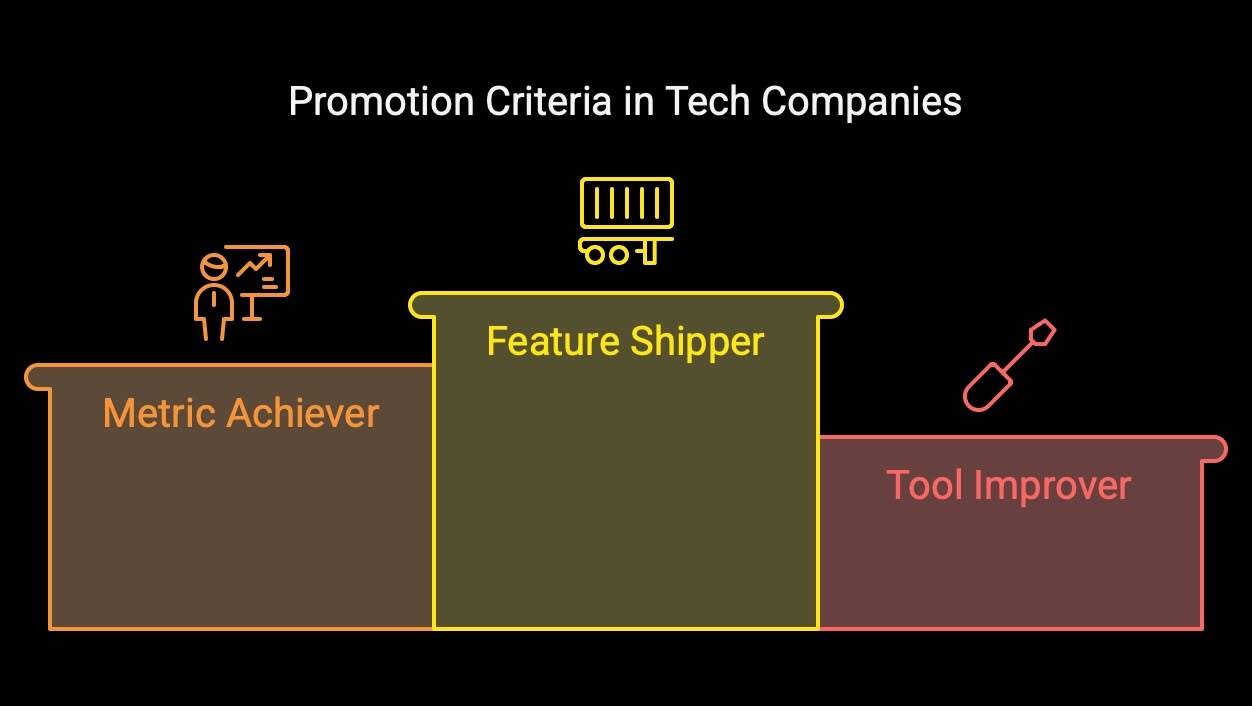
Want to know why that brilliant engineer who automated half your deployment pipeline left for another company? Look at your promotion criteria. Companies consistently reward shipping features and hitting business metrics, not improving internal tools or developer productivity. It’s like being an airline mechanic and only getting praised for how many planes take off, not how you made maintenance safer and faster for everyone.
When was the last time someone got a promotion for making the build system 50% faster? Or received a bonus for reducing deployment friction? Never, that’s when. Instead, we celebrate the hero who pulled an all-nighter fixing a production issue (that better tooling could have prevented) or the team that shipped a feature by working weekends (because the development process is so cumbersome).
I’ve watched brilliant engineers choose between doing what’s right for the team’s long-term productivity and what’s right for their career growth. Guess which one usually wins? Even at tech giants with dedicated platform teams, the fastest path to promotion is still shipping customer-facing features. When your performance review template has a section for “features shipped” but not for “hours saved through automation,” you’re telling developers exactly what you value.
⏱️ The Short-Term Syndrome
Most companies operate like they’re constantly running a sprint when software development is really an ultra-marathon. DevEx improvements are like compound interest – the benefits take time to materialize but are transformative when they do. Try explaining to your CFO that investing in better development tools will pay off in 6-12 months, and watch their face do that thing where they’re smiling but their eyes scream “next quarter’s numbers!”
I’ve seen teams waste months rebuilding features because technical debt made the original codebase unmaintainable. The time spent could have been invested in better tooling and processes, but that wouldn’t have shown up on this quarter’s PowerPoint slides.
🔧 The Infrastructure Paradox
Here’s a fun reality about DevEx: like good plumbing, people only notice it when it’s broken. When your development environment, CI/CD pipeline, and deployment processes work smoothly, they become invisible. Nobody writes glowing reviews about the deployment that went exactly as expected or the development environment that “just worked.”
This creates a vicious cycle: companies only invest in DevEx when things become painful enough to be visible to leadership. I’ve seen teams suffer through slow builds and flaky tests for years until a major production incident finally triggers investment in better tooling. It’s like waiting for the roof to leak before fixing it – and then only patching the hole instead of replacing the aging shingles.
💡 The Bottom Line
DevEx isn’t a nice-to-have luxury – it’s the foundation that determines how quickly and reliably you can deliver value to your customers. Every day your developers struggle with poor tooling and processes, you’re not just losing productivity; you’re actively falling behind competitors who’ve figured this out. The harsh truth? Companies that treat DevEx as an afterthought today will be playing catch-up tomorrow, trying to attract talent that’s already moved on to organizations that understand the value of developer productivity. The real question isn’t whether you can afford to invest in DevEx – it’s whether you can afford not to.
Next week: practical strategies for advocating for DevEx improvements in organizations that think “developer happiness” is just having free coffee in the break room. We’ll cover everything from building the business case to finding quick wins that create momentum for bigger changes.
Stay productive! 🚀
Powered by coffee ☕️ and the knowledge that someone somewhere has proper DevEx funding
📊 Stat
97% of Developers Experience Context Switching Due to Multiple Vendor Tools

The State of Developer Experience 2024 report highlights that managing an average of 14 tools often leads to inefficiencies. Developers face fragmented ecosystems that impact their productivity, with nearly all admitting to context switching regularly. Simplifying or unifying tooling can enhance workflow consistency
💡 Key Insight: Tool consolidation can reduce developer cognitive load and improve productivity.
📌 Essential Reads
🚫 Developer Experience: Devs Shouldn’t Have to “Figure It Out. This piece emphasizes that good Developer Experience (DevEx) supports innovation, safety, and velocity. It argues that developers should focus on important tasks without dealing with technical debt related to non-functional concerns, advocating for environments that minimize context switching and decision fatigue.
🧑🏽💻 Understanding Developer Experience (DevEx) and Why It Matters. This article emphasizes that Developer Experience (DevEx) is not just a passing trend but a crucial factor in enhancing productivity, satisfaction, and retention among developers. It outlines key components of DevEx, including systems, technology, processes, workflows, culture, and work environment, and provides best practices for organizations to create an environment where developers can work efficiently and produce high-quality code with minimal friction.
✍🏽 Writing for the Developer Experience: A Guide for Technical Writers. This guide explores the role of technical writers in enhancing Developer Experience (DevEx). It discusses how clear and concise documentation can improve usability, findability, and credibility for developers, and offers practical tips for writing effective technical content that supports developers in their work.
🛠️ Tools
Get the next issue on Thursday
5-minute weekly reads showing how top engineering teams solve their biggest DevEx challenges and reduce burnout.
Subscribe for freeDelivered every Thursday. Trusted by 3,000+ engineers at companies like Stripe, Google, and Netflix.